
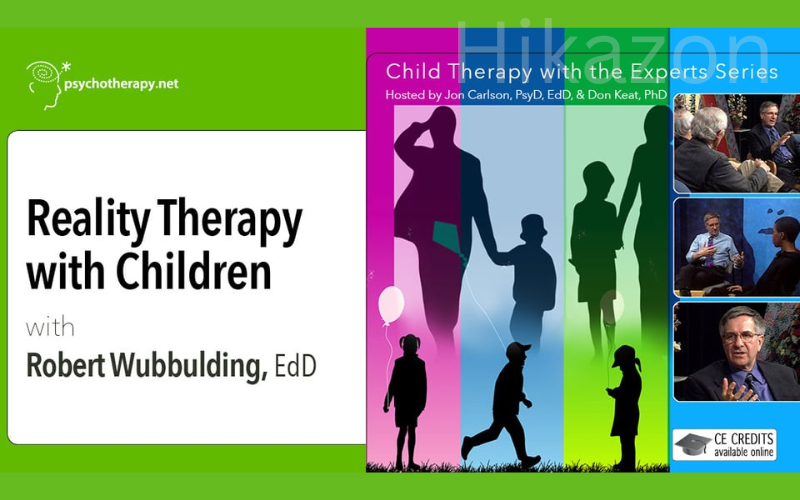
Reality Therapy with Children with Robert Wubbolding
$8.00
Reality Therapy with Children with Robert Wubbolding – Digital Download!
Content Proof:

Review of Reality Therapy with Children: Insights from Robert Wubbolding
Reality therapy, as articulated by Robert Wubbolding, provides a transformative approach to counseling children. Rooted in William Glasser’s choice theory, this therapeutic strategy emphasizes personal choice and the inherent responsibility individuals have in shaping their behavior and fulfilling their basic human needs. Reality therapy seeks to guide children in gaining insights into their behaviors, empowering them to assess the effectiveness of these patterns and consciously decide to change those that do not yield the desired outcomes. In this comprehensive review, we will delve into the fundamental principles of reality therapy, its practical applications with children, and the invaluable contributions made by Robert Wubbolding in this field.
Understanding Reality Therapy
Reality therapy is much more than a technique; it’s a philosophy that merges psychological principles with practical strategies for everyday life. At its core, it revolves around the belief that individuals possess the power to change their circumstances through their decisions. Unlike traditional therapy that often delves into past experiences, reality therapy focuses on the present and future, making it particularly suitable for children who often grapple with reacting to immediate concerns rather than reflecting on their past.
- Core Principles of Reality Therapy:
- Choice Theory: At the heart of reality therapy is Glasser’s choice theory, which posits that all behavior is an attempt to fulfill fundamental human needs such as love, power, freedom, fun, and survival.
- Responsibility: This approach emphasizes personal responsibility, encouraging clients to recognize their role in crafting their experiences rather than blaming external forces.
- Self-Evaluation: Children are guided to assess their behaviors and the outcomes they produce, promoting self-awareness.
- Goal-Oriented Focus:
- Reality therapy is oriented towards achieving personal goals. Counselors help children set realistic goals and explore the choices that will help them meet these objectives. This focus on practical outcomes makes the therapy engaging and relevant for younger clients.
- The Therapeutic Relationship:
- One of the cornerstones of reality therapy is the establishment of a strong therapeutic alliance. The relationship between the counselor and client is pivotal, fostering an environment where children feel safe and valued. In this relationship, the counselor serves as both a mentor and a guide, assisting the child in navigating the complexities of their emotional landscape.
Strategies for Working with Children
Robert Wubbolding’s extensive experience in applying reality therapy specifically to children has unveiled practical strategies that foster meaningful interactions. These approaches not only promote engagement but also nurture a child’s self-discovery.
- Engaging Dialogue:
- Engaging the child in meaningful dialogue is essential. Using open-ended questions invites children to express their feelings and thoughts. For example, instead of asking, “Are you sad?”, a counselor might say, “Can you tell me about what has been on your mind lately?” This opens the door to deeper reflection and conversation.
- Articulating Feelings:
- Encouraging children to articulate their emotions is a vital element of the process. Counselors can introduce emotion charts or diagrams that help children identify and label their feelings. This not only assists in building emotional vocabulary but fosters self-awareness.
- Recognizing Consequences:
- Wubbolding underscores the importance of helping children recognize the consequences of their actions. Through discussions about past choices and their outcomes, children begin to understand how their decisions shape their lives. Engaging exercises, such as role-playing or scenario analyses, can vividly illustrate these concepts.
- Learning through Play:
- Wubbolding advocates for the use of playful, age-appropriate interventions. Activities like games or storytelling can make the therapeutic process enjoyable and less intimidating. Play serves as a natural medium for children to express themselves and explore their emotions, fostering a sense of trust and safety.
Building Trust and Empowerment
The relationship between a counselor and a child is one of mutual respect and trust, and this aspect is crucial in the effectiveness of reality therapy. Empowering children to believe in their capacity to effect change is transformative.
- Creating a Safe Environment:
- A trustworthy space is pivotal for effective therapy. Counselors must ensure that children feel valued and understood without fear of judgment. This safety allows for open communication, which is essential for successful interventions.
- Empowerment through Choice:
- One of the most powerful facets of reality therapy is the emphasis on choice. When counselors help children understand that they can influence their situations through their decisions, it fosters a sense of control. In this regard, children learn to see themselves as active participants in their lives rather than passive observers.
- Developing Problem-Solving Skills:
- Empowerment extends to teaching children problem-solving skills. Assisting them in developing alternative behaviors can lead to more positive outcomes. This can involve brainstorming sessions where different scenarios and responses are explored, illustrating the concept that multiple choices exist for addressing a challenge.
Reflection on Behavior and Choices
An effective aspect of reality therapy in child counseling is the encouragement of self-reflection concerning behavior and decisions. Wubbolding’s insights provide counselors with practical tools to facilitate this process.
- Real-Time Dialogues:
- Engaging in real-time dialogues allows children to process their feelings and reactions as situations unfold. This immediacy can deepen their understanding of behaviors and the resulting effects on their relationships.
- Behavioral Analysis:
- Incorporating behavioral analysis exercises can illustrate the correlation between choices and outcomes. Listing specific actions and their consequences not only helps to clarify the impact of decisions but also enables children to visualize the path toward better alternatives.
- Encouraging Self-Discovery:
- Self-discovery plays a vital role in the therapeutic process. By guiding children to explore their motivations and desires, counselors can lead them to a greater understanding of themselves. Activities like journaling or creating vision boards can facilitate exploration and expression.
Conclusion
Robert Wubbolding’s contributions to reality therapy have significantly enhanced counseling practices for children. By emphasizing choice, responsibility, and the nurturing of client relationships, this approach equips mental health professionals with valuable tools for facilitating meaningful change. Through the integration of engaging strategies and the establishment of a supportive therapeutic alliance, counselors can empower children to navigate their emotions, recognize the consequences of their behaviors, and develop problem-solving skills. The resilience and self-awareness fostered through this approach encourage not just immediate improvement in coping strategies but a lifelong capacity for growth and adaptation. In essence, reality therapy, as illuminated by Wubbolding, offers a robust framework for promoting emotional development in children, paving the way for healthier future choices and relationships.
Frequently Asked Questions:
Business Model Innovation: We use a group buying approach that enables users to split expenses and get discounted access to well-liked courses.
Despite worries regarding distribution strategies from content creators, this strategy helps people with low incomes.
Legal Aspects to Take into Account: Our operations’ legality entails several intricate considerations.
There are no explicit resale restrictions mentioned at the time of purchase, even though we do not have the course developers’ express consent to redistribute their content.
This uncertainty gives us the chance to offer reasonably priced instructional materials.
Quality Assurance: We guarantee that every course resource you buy is exactly the same as what the authors themselves are offering.
It’s crucial to realize, nevertheless, that we are not authorized suppliers. Therefore, the following are not included in our offerings:
– Live coaching sessions or calls with the course author.
– Entry to groups or portals that are only available to authors.
– Participation in closed forums.
– Straightforward email assistance from the writer or their group.
Our goal is to lower the barrier to education by providing these courses on our own, without the official channels’ premium services. We value your comprehension of our distinct methodology.
Be the first to review “Reality Therapy with Children with Robert Wubbolding”
You must be logged in to post a review.
Related products

Psychology

Psychology


Psychology


Psychology


Psychology

Psychology

Reviews
There are no reviews yet.