
-
×
 Fashion Photography: Model Testing with Agencies by Elizabeth Wiseman
1 × $8.00
Fashion Photography: Model Testing with Agencies by Elizabeth Wiseman
1 × $8.00 -
×
 Orgasmic Oral Sex By Adina Rivers
1 × $5.00
Orgasmic Oral Sex By Adina Rivers
1 × $5.00 -
×
 The Mindvana Method (Gold) By Jay Cataldo - Learn Hypnosis Fast
1 × $5.00
The Mindvana Method (Gold) By Jay Cataldo - Learn Hypnosis Fast
1 × $5.00 -
×
 Mobile Editing Masterclass By Club Life Design
1 × $39.00
Mobile Editing Masterclass By Club Life Design
1 × $39.00 -
×
 FINE ART PORTRAITURE, STYLING and RETOUCHING by GEMMY WOUD-BINNENDIJK
1 × $8.00
FINE ART PORTRAITURE, STYLING and RETOUCHING by GEMMY WOUD-BINNENDIJK
1 × $8.00 -
×
 Create Your 7-Figure Brand Story By Celinne Da Costa
1 × $6.00
Create Your 7-Figure Brand Story By Celinne Da Costa
1 × $6.00 -
×
 The SMMA Academy Plus 2023 By Sander Stage
1 × $23.00
The SMMA Academy Plus 2023 By Sander Stage
1 × $23.00 -
×
 Ultimate Collection (28 Courses) - Make A Better Sex And Life By Gabrielle Moore
1 × $46.00
Ultimate Collection (28 Courses) - Make A Better Sex And Life By Gabrielle Moore
1 × $46.00 -
×
 Secrets of Internal Power - Self Defense Supercharger By David Snyder - NLPPower
1 × $85.00
Secrets of Internal Power - Self Defense Supercharger By David Snyder - NLPPower
1 × $85.00 -
×
 The Iron Fortress Become an Impenetrable Force - Virtually Overnight By Russell Stutely
1 × $46.00
The Iron Fortress Become an Impenetrable Force - Virtually Overnight By Russell Stutely
1 × $46.00 -
×
 The BULLETPROOF Series - POSTURE Program By OMNI body Healthcare
1 × $15.00
The BULLETPROOF Series - POSTURE Program By OMNI body Healthcare
1 × $15.00 -
×
 Functional Understanding of Human Rehabilitation By Leonard Van Gelder
1 × $139.00
Functional Understanding of Human Rehabilitation By Leonard Van Gelder
1 × $139.00 -
×
 Superhuman Potential Bundle By Superhuman
1 × $132.00
Superhuman Potential Bundle By Superhuman
1 × $132.00 -
×
 The 32 Principles (Purple-to-Brown Belt) By Gracie University
1 × $54.00
The 32 Principles (Purple-to-Brown Belt) By Gracie University
1 × $54.00 -
×
 Land Sourcing Academy By Lloyd Girardi
1 × $194.00
Land Sourcing Academy By Lloyd Girardi
1 × $194.00 -
×
 The Kill The Nice Guy - The Warrior By Traver Boehm
1 × $109.00
The Kill The Nice Guy - The Warrior By Traver Boehm
1 × $109.00 -
×
 Epic Lover By Caitlin V
1 × $5.00
Epic Lover By Caitlin V
1 × $5.00 -
×
 Rolling Along the Anatomy Trains (Online Video Program Only) By Tom Myers & Jill Miller
1 × $54.00
Rolling Along the Anatomy Trains (Online Video Program Only) By Tom Myers & Jill Miller
1 × $54.00 -
×
 Natural Vibing By Swinggcat
1 × $23.00
Natural Vibing By Swinggcat
1 × $23.00 -
×
 Master Lover 2023 - Secrets For Mystical Sexual Union By Tantra Garden
1 × $69.00
Master Lover 2023 - Secrets For Mystical Sexual Union By Tantra Garden
1 × $69.00 -
×
 SPACE DRONES SOUND FX By Ocular Sounds
1 × $4.00
SPACE DRONES SOUND FX By Ocular Sounds
1 × $4.00 -
×
 Innovations in Psychotherapy By PESI
1 × $85.00
Innovations in Psychotherapy By PESI
1 × $85.00 -
×
 Master Cycle - Blue Belt Stripe 1-4 Program By Gracie University
1 × $46.00
Master Cycle - Blue Belt Stripe 1-4 Program By Gracie University
1 × $46.00 -
×
 Short Form Riches Bootcamp 2023 - AI ChatGPT Bot By Chase Reiner
1 × $5.00
Short Form Riches Bootcamp 2023 - AI ChatGPT Bot By Chase Reiner
1 × $5.00 -
×
 Vibrational Testing & Healing – Full Series By Robert Gilbert
1 × $209.00
Vibrational Testing & Healing – Full Series By Robert Gilbert
1 × $209.00 -
×
 The Awakened Heart By Shefali Tsabary
1 × $233.00
The Awakened Heart By Shefali Tsabary
1 × $233.00 -
×
 Women's Erotic and Emotional Fulfillment By Tantra Garden
1 × $23.00
Women's Erotic and Emotional Fulfillment By Tantra Garden
1 × $23.00 -
×
 Energy Arts Live Holiday 2023 By Bruce Frantzis & Craig Barnes
1 × $31.00
Energy Arts Live Holiday 2023 By Bruce Frantzis & Craig Barnes
1 × $31.00 -
×
 Technique Series Set of 10 Videos By Tom Myers
1 × $54.00
Technique Series Set of 10 Videos By Tom Myers
1 × $54.00 -
×
 All 60 Tutorials in 1 Seminar By GHK Academy
1 × $264.00
All 60 Tutorials in 1 Seminar By GHK Academy
1 × $264.00 -
×
 Messaging Program 2024 By Phoebe Kuhn - The Content Emporium
1 × $209.00
Messaging Program 2024 By Phoebe Kuhn - The Content Emporium
1 × $209.00 -
×
 Complete Downloadable Film Collection By Systema Vasiliev
1 × $116.00
Complete Downloadable Film Collection By Systema Vasiliev
1 × $116.00 -
×
 TONAL RISERS SOUND FX By Ocular Sounds
1 × $4.00
TONAL RISERS SOUND FX By Ocular Sounds
1 × $4.00 -
×
 Overcome Back Pain Course By Stretch Theraphy
1 × $31.00
Overcome Back Pain Course By Stretch Theraphy
1 × $31.00 -
×
 Full Manipulation Course Access By OMT Training
1 × $54.00
Full Manipulation Course Access By OMT Training
1 × $54.00 -
×
 10 Steps to Confidence & Inner Power By Charisma School
1 × $31.00
10 Steps to Confidence & Inner Power By Charisma School
1 × $31.00 -
×
 Train and Inspire Your Team (Videos Only) By John Demartini
1 × $78.00
Train and Inspire Your Team (Videos Only) By John Demartini
1 × $78.00 -
×
 Reaper Fast Start By Kenneth Gioia
1 × $5.00
Reaper Fast Start By Kenneth Gioia
1 × $5.00 -
×
 Beyond Form By Bree Melanson
1 × $54.00
Beyond Form By Bree Melanson
1 × $54.00 -
×
 All Forms & Strengthening Bundle By Chow Gar Tong Long
1 × $78.00
All Forms & Strengthening Bundle By Chow Gar Tong Long
1 × $78.00 -
×
 The Upgrade Collective - 6 Courses By Dave Asprey
1 × $62.00
The Upgrade Collective - 6 Courses By Dave Asprey
1 × $62.00 -
×
 Mastering Neuroinflammation and Neuroplasticity By Brendan Vermeire
1 × $78.00
Mastering Neuroinflammation and Neuroplasticity By Brendan Vermeire
1 × $78.00 -
×
 New Coach Society By Lattice Hudson
1 × $78.00
New Coach Society By Lattice Hudson
1 × $78.00 -
×
 The Goddess Unveiled By Tantra Garden
1 × $23.00
The Goddess Unveiled By Tantra Garden
1 × $23.00 -
×
 Fix Injury University Bundle By Got Rom
1 × $116.00
Fix Injury University Bundle By Got Rom
1 × $116.00 -
×
 Weapons of Social Seduction By David Snyder - NLPPower
1 × $5.00
Weapons of Social Seduction By David Snyder - NLPPower
1 × $5.00 -
×
 Operation - Dangerous Warrior By Russell Stutely
1 × $139.00
Operation - Dangerous Warrior By Russell Stutely
1 × $139.00 -
×
 The Universal Vibrational Spectrum By Robert Gilbert
1 × $101.00
The Universal Vibrational Spectrum By Robert Gilbert
1 × $101.00 -
×
 Lead Management Mastery 2023 By Real Estate Matt
1 × $272.00
Lead Management Mastery 2023 By Real Estate Matt
1 × $272.00 -
×
 Land Flipping 101 Course By Kris Thomas
1 × $209.00
Land Flipping 101 Course By Kris Thomas
1 × $209.00 -
×
 Quantifiable Edges VIX Trading Course with Amibroker Code By Quantifiable Edges
1 × $15.00
Quantifiable Edges VIX Trading Course with Amibroker Code By Quantifiable Edges
1 × $15.00 -
×
 Embrace the Gifts of Neurodiversity as a Highly Sensitive Person By Julie Bjelland - The Shift Network
1 × $46.00
Embrace the Gifts of Neurodiversity as a Highly Sensitive Person By Julie Bjelland - The Shift Network
1 × $46.00 -
×
 Take Charge of Your Life By Jim Rohn
1 × $15.00
Take Charge of Your Life By Jim Rohn
1 × $15.00 -
×
 Online - Master Planning for Life USA Aug 2020 By John Demartini ( Videos Only)
1 × $233.00
Online - Master Planning for Life USA Aug 2020 By John Demartini ( Videos Only)
1 × $233.00 -
×
 Olympus Lenses: The Complete Guide By John Greengo
1 × $5.00
Olympus Lenses: The Complete Guide By John Greengo
1 × $5.00 -
×
 FUT SAO (佛手) – Buddhist Hand By Chow Gar Tong Long
1 × $23.00
FUT SAO (佛手) – Buddhist Hand By Chow Gar Tong Long
1 × $23.00 -
×
 The Loving Relationship Formula (Videos Only) By John Demartini
1 × $39.00
The Loving Relationship Formula (Videos Only) By John Demartini
1 × $39.00 -
×
 THE COMPLETE WHOOSHES COLLECTION By Ocular Sounds
1 × $8.00
THE COMPLETE WHOOSHES COLLECTION By Ocular Sounds
1 × $8.00 -
×
 Time-Lapse Photography and Editing by Drew Geraci
1 × $8.00
Time-Lapse Photography and Editing by Drew Geraci
1 × $8.00 -
×
 Manage the Greeks and the Risk of ODTE and 1-4 day Trades for October 2023 By Sheridan Options Mentoring
1 × $85.00
Manage the Greeks and the Risk of ODTE and 1-4 day Trades for October 2023 By Sheridan Options Mentoring
1 × $85.00 -
×
 Natural Light Portrait Photography With Any Camera By Stone River eLearning
1 × $6.00
Natural Light Portrait Photography With Any Camera By Stone River eLearning
1 × $6.00 -
×
 Lifelong Success System By Igor Ledochowski
1 × $31.00
Lifelong Success System By Igor Ledochowski
1 × $31.00 -
×
 Realistic Watercolors Step by Step By Anna Mason
1 × $5.00
Realistic Watercolors Step by Step By Anna Mason
1 × $5.00 -
×
 7 DAY AWAKENING PROGRAM By Shae Matthews
1 × $5.00
7 DAY AWAKENING PROGRAM By Shae Matthews
1 × $5.00 -
×
 Rethinking Addiction: The Integrative Harm Reduction Approach By Andrew Tatarsky - PESI
1 × $23.00
Rethinking Addiction: The Integrative Harm Reduction Approach By Andrew Tatarsky - PESI
1 × $23.00 -
×
 Photography Composition & Portrait Photography Masterclass By Stone River eLearning
1 × $6.00
Photography Composition & Portrait Photography Masterclass By Stone River eLearning
1 × $6.00 -
×
 Enter The System Bundle By John Danaher
1 × $54.00
Enter The System Bundle By John Danaher
1 × $54.00 -
×
 Land Your First Remote Job By Andrea Valeria
1 × $124.00
Land Your First Remote Job By Andrea Valeria
1 × $124.00 -
×
 Relational EMDR Experiential Course with Deany Laliotis Step-by-Step Skills and Consultation By Deany Laliotis - PESI
1 × $62.00
Relational EMDR Experiential Course with Deany Laliotis Step-by-Step Skills and Consultation By Deany Laliotis - PESI
1 × $62.00 -
×
 Bulletproof Asset Protection Library By William Bronchick
1 × $31.00
Bulletproof Asset Protection Library By William Bronchick
1 × $31.00 -
×
 All 39 SBS Tutorials in 1 Seminar By GHK Academy
1 × $155.00
All 39 SBS Tutorials in 1 Seminar By GHK Academy
1 × $155.00 -
×
 The Art Of Drama Editing PRO By Film Editing Pro
1 × $54.00
The Art Of Drama Editing PRO By Film Editing Pro
1 × $54.00 -
×
 Skipblast Courses Collection Bundle
1 × $31.00
Skipblast Courses Collection Bundle
1 × $31.00 -
×
 Quantifiable Edges - 3 Course Bundle
1 × $31.00
Quantifiable Edges - 3 Course Bundle
1 × $31.00 -
×
 Go Further Faster Bundle By John Danaher
1 × $179.00
Go Further Faster Bundle By John Danaher
1 × $179.00 -
×
 Trading with Price Action and Volume Profile By Price Action Volume Trader
1 × $46.00
Trading with Price Action and Volume Profile By Price Action Volume Trader
1 × $46.00 -
×
 Quantum Success Coaching Academy 2020 By Christy Whitman
1 × $62.00
Quantum Success Coaching Academy 2020 By Christy Whitman
1 × $62.00 -
×
 Free From Depression By Peter Crone
1 × $46.00
Free From Depression By Peter Crone
1 × $46.00 -
×
 AI Writing Course for Bloggers and Digital Marketers By Geoff Cudd
1 × $5.00
AI Writing Course for Bloggers and Digital Marketers By Geoff Cudd
1 × $5.00 -
×
 Walking with the Elements 2023 By Sixty Skills
1 × $15.00
Walking with the Elements 2023 By Sixty Skills
1 × $15.00 -
×
 Bond Market Course By The Macro Compass
1 × $39.00
Bond Market Course By The Macro Compass
1 × $39.00 -
×
 Agency Partner Program By Jason Wardrop
1 × $15.00
Agency Partner Program By Jason Wardrop
1 × $15.00 -
×
 Scalers Method By Alex Micol
1 × $15.00
Scalers Method By Alex Micol
1 × $15.00 -
×
 Custom Vibrational Healing By Robert Gilbert
1 × $62.00
Custom Vibrational Healing By Robert Gilbert
1 × $62.00 -
×
 Path To Powers (Video Only) By John Demartini
1 × $31.00
Path To Powers (Video Only) By John Demartini
1 × $31.00

Evidence-Based Psychotherapy Treatment Planning with Timothy Bruce & Arthur Jongsma
$8.00
Evidence-Based Psychotherapy Treatment Planning with Timothy Bruce & Arthur Jongsma – Digital Download!
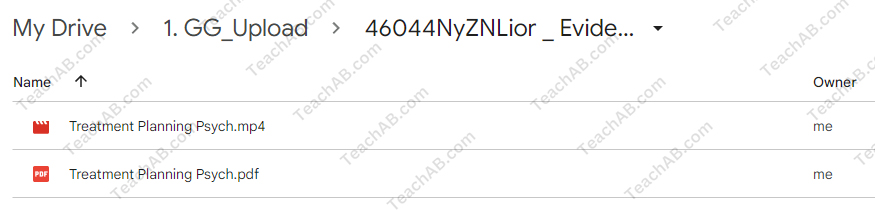
Content Proof:
Evaluation of the Work of Timothy Bruce and Arthur Jongsma on Evidence-Based Psychotherapy Treatment Planning
Evidence-based psychotherapy is more important than ever in a time when mental health procedures are closely examined. For mental health practitioners, Drs. Timothy Bruce and Arthur Jongsma’s series on evidence-based psychotherapy treatment planning is a lighthouse. This extensive resource addresses a variety of clinical illnesses, such as anxiety disorders, depression, substance use disorders, and more, in an organized, research-based manner. Fundamentally, the show speaks to the pressing need for individualized, successful treatment programs that are in line with scientific data. Bruce and Jongsma illuminate the way to improving therapeutic outcomes by fusing fundamental ideas with real-world applications. This serves as a beacon of guidance for both clients and clinicians.
The Evidence-Based Treatment Planning Framework
The Framework of Evidence-Based Treatment Planning
A Six-Step Process
Dr. Bruce and Dr. Jongsma propose a well-defined six-step treatment planning process designed to elevate the practice of psychotherapy. This systematic blueprint helps mental health practitioners navigate the complexities of different disorders while ensuring adherence to the highest standards of care. The steps are as follows:
- Assessment: Understanding the client’s specific needs through detailed evaluations.
- Diagnosis: Identifying the clinical condition that requires intervention.
- Treatment Goals: Establishing measurable and achievable objectives.
- Selection of Interventions: Choosing empirically supported treatments (ESTs) that align with the treatment goals.
- Implementation: Effectively applying the selected interventions in a clinical context.
- Evaluation: Regularly assessing the client’s progress and making necessary adjustments.
This methodical approach acts as a compass, assisting professionals in navigating the intricacies of mental health care. Bruce and Jongsma encourage practitioners to go beyond anecdotal practices by firmly establishing their methodology in empirical research, guaranteeing that the treatments provided are not only pertinent but also supported by science.
Integration of Empirically Supported Treatments
Within this six-step framework, a critical aspect highlighted by the authors is the incorporation of empirically supported treatments (ESTs) into clinical practice. ESTs represent the gold standard in mental health interventions, having demonstrated significant effectiveness through rigorous research and clinical trials. By distinguishing between treatments that are “well-established” and those that are “probably efficacious,” practitioners gain a clearer understanding of the landscape of evidence-based practices.
| Type of Treatment | Definition | Examples |
| Well-Established | Treatments with significant evidence | Cognitive Behavioral Therapy (CBT), Dialectical Behavior Therapy (DBT) |
| Probably Efficacious | Treatments with moderate evidence | Acceptance and Commitment Therapy (ACT), Interpersonal Therapy (IPT) |
These distinctions enable clinicians to confidently choose the most appropriate interventions for their clients, thereby fostering a stronger therapeutic alliance. This alliance is crucial, as it lays the groundwork for effective communication and collaboration elements that significantly enhance client engagement and treatment adherence.
Case Vignettes: Bringing Theory to Life
Real-Life Application of Principles
A hallmark feature of the series is its inclusion of case vignettes that illustrate the practical application of the theoretical principles discussed. These narratives provide clinicians with relatable, real-life scenarios in which the six-step treatment planning process and ESTs operate effectively. For instance, consider a vignette that explores a patient struggling with generalized anxiety disorder (GAD).
In this scenario, the practitioner conducts a thorough assessment that leads to a diagnosis of GAD. Following the structured process, the clinician sets treatment goals such as reducing anxiety symptoms and improving coping strategies while selecting CBT as the preferred intervention. As the treatment unfolds, both the clinician and client conduct regular evaluations, adjusting the treatment plan based on the client’s responses and progress.
Improving Education using Illustrative Examples
In addition to making the material approachable, these vignettes are effective teaching aids for professionals of all skill levels. They promote a greater comprehension of how to employ strategies successfully in clinical settings by emphasizing the incorporation of evidence-based concepts into routine practice. For mental health practitioners, seeing theoretical frameworks put into practice is like watching a compass steer a ship through choppy seas, giving direction in the face of uncertainty.
By grabbing the clinician’s interest, these tales encourage clinicians to discuss optimal practices and think about how they could modify similar tactics for their own patients. In the rapidly changing field of mental health care, this emotional connection to the content promotes an atmosphere of ongoing learning and introspection.
Historical Context and Evolution of Evidence-Based Practices
Tracing the Roots of ESTs
One of the intriguing aspects of Bruce and Jongsma’s work is the exploration of the historical evolution of empirically supported treatments (ESTs). In understanding the trajectory of evidence-based practices, one can appreciate the strides made toward ensuring ethical standards in therapeutic interventions. This rich historical backdrop serves not only as an informative context but also highlights the importance of adapting practices as new research emerges.
For instance, the early development of behavioral therapies laid the groundwork for more nuanced approaches like CBT, demonstrating how incremental advancements have reshaped our understanding of mental health treatments. The journey from behavioral theories to sophisticated methodologies is similar to the evolution of a caterpillar into a butterfly, symbolizing growth and transformation over time.
Differentiating Treatment Approaches
Bruce and Jongsma enable mental health professionals to be astute research consumers by distinguishing between “well-established” and “probably efficacious” treatments. This distinction is essential because it gives clinicians the confidence they need to successfully navigate the frequently bewildering array of treatment alternatives. With so many options, knowing which modalities are backed by solid research guarantees that patients receive treatment based on facts rather than speculation.
The writers even explore the consequences of mistaking “expert opinion” for empirical backing, which might result in treatment plans that are detrimental or ineffectual. This highlights the significance of thorough evaluation procedures and acts as a warning to practitioners.
Establishing a Therapeutic Partnership
The Significance of Collaboration and Trust
The emphasis on developing a therapeutic alliance—a connection marked by mutual trust and cooperation between the doctor and the client—is a crucial lesson to be learned from Bruce and Jongsma’s series. This essential component is essential to establishing a secure environment where clients can examine their problems and undergo personal development.
According to the authors, patients are more likely to participate fully in therapy when they believe their therapists are qualified and reliable. In the end, this involvement produces better results. The therapeutic alliance can be thought of as a bridge that connects two people who need to understand and communicate well in order to navigate the frequently challenging landscape of mental health.
Strategies for Enhancing the Alliance
To facilitate this alliance, Bruce and Jongsma provide practical strategies that practitioners can adopt:
- Active Listening: Showing genuine interest in clients’ concerns.
- Empathy: Validating clients’ feelings and experiences without judgment.
- Transparency: Keeping clients informed about the treatment process and rationale behind chosen interventions.
- Consistency: Establishing regular sessions to reinforce commitment to treatment.
By implementing these strategies, clinicians can nurture the relationship they have with their clients, paving the way for deeper exploration and more profound therapeutic work.
Navigating Challenges in Clinical Practice
Common Obstacles
While Bruce and Jongsma’s framework offers valuable insights, it is essential to acknowledge that mental health practitioners often face significant challenges in applying evidence-based practices. Among these obstacles, one can identify:
- Resource Limitations: Not all clinicians have access to the latest research or continuing education opportunities.
- Client Resistance: Some clients may show skepticism toward certain evidence-based interventions due to preconceived notions or past experiences.
- Time Constraints: The rigorous demands of clinical practice may limit time available for thorough assessments and evaluations.
Strategies for Overcoming Hurdles
To navigate these hurdles, Bruce and Jongsma suggest a multifaceted approach that involves:
- Continuous Education: Engaging in professional development to stay updated on current research findings.
- Building Rapport: Establishing a trusting relationship with clients to better address their concerns regarding evidence-based treatments.
- Flexible Implementation: Adapting evidence-based principles to fit the unique context of each client, while remaining grounded in empirical support.
Through creativity and commitment, mental health professionals can conquer these challenges, aligning their practice with the ethos laid out by Bruce and Jongsma.
In conclusion
The evidence-based psychotherapy treatment planning series by Drs. Timothy Bruce and Arthur Jongsma is a huge resource in a society where people are demanding more responsibility and effectiveness in mental health care. The authors provide a road map for mental health professionals looking to further their careers by fusing systematic procedures, empirical research, and interesting case studies. Clinicians can create stronger therapy relationships and help their clients have better futures as they set out on this road of incorporating evidence-based concepts into their practice. In the end, their work promotes the goal of personalized, scientifically informed treatment while bridging the gap between theory and practice by encouraging doctors to consider their approaches.
Frequently Asked Questions:
Business Model Innovation: We operate a group buying strategy, allowing participants to share costs and access popular courses at reduced prices. This model benefits individuals with limited financial resources, despite concerns from content creators about distribution methods.
Legal Considerations: The legality of our operations involves complex issues. Although we don’t have explicit permission from course creators to resell their content, there are no specific resale restrictions stated at the time of purchase. This ambiguity creates an opportunity for us to provide affordable educational resources.
Quality Control: We ensure that all course materials purchased are identical to those offered directly by the creators. However, it’s important to understand that we are not official providers. As such, our offerings do not include:
– Live coaching calls or sessions with the course author.
– Access to exclusive author-controlled groups or portals.
– Membership in private forums.
– Direct email support from the author or their team.
We aim to reduce the cost barrier in education by offering these courses independently, without the premium services available through official channels. We appreciate your understanding of our unique approach.
Be the first to review “Evidence-Based Psychotherapy Treatment Planning with Timothy Bruce & Arthur Jongsma”
You must be logged in to post a review.
Related products


Psychology
$93.00


Psychology
$389.00

$31.00

$31.00

$23.00

$54.00
$78.00
Psychology
$85.00
Psychology
$233.00

Reviews
There are no reviews yet.