
-
×
 Clairsentience (Self Study Course) By Lesley Phillips
1 × $62.00
Clairsentience (Self Study Course) By Lesley Phillips
1 × $62.00 -
×
 Overcome Pornography for Good By Sara Brewer
1 × $5.00
Overcome Pornography for Good By Sara Brewer
1 × $5.00 -
×
 Copywriting for Creatives 2024 by Ashlyn Writes
1 × $23.00
Copywriting for Creatives 2024 by Ashlyn Writes
1 × $23.00 -
×
 Business 101 For Coaches By Jamie Smith - Business Foundations
1 × $139.00
Business 101 For Coaches By Jamie Smith - Business Foundations
1 × $139.00 -
×
 Yes Supply Method 2022 - Become a Life Coach, Manifestation Coach and Get Your NLP Certification By Reese Evans - Yes Supply
1 × $124.00
Yes Supply Method 2022 - Become a Life Coach, Manifestation Coach and Get Your NLP Certification By Reese Evans - Yes Supply
1 × $124.00 -
×
 Online Dating for Men: Navigate the Digital Dating World Like a Pro By Hayley Quinn
1 × $5.00
Online Dating for Men: Navigate the Digital Dating World Like a Pro By Hayley Quinn
1 × $5.00 -
×
 The Power of Conversational Hypnosis By Igor Ledochowski
1 × $23.00
The Power of Conversational Hypnosis By Igor Ledochowski
1 × $23.00 -
×
 Weapons of Social Seduction By David Snyder - NLPPower
1 × $5.00
Weapons of Social Seduction By David Snyder - NLPPower
1 × $5.00 -
×
 Discover How To Really Use NLP In Hypnosis For Amazing Results By Igor Ledochowski
1 × $23.00
Discover How To Really Use NLP In Hypnosis For Amazing Results By Igor Ledochowski
1 × $23.00 -
×
 Real World Hypnosis : Trauma Resolution By David Snyder - NLPPower
1 × $5.00
Real World Hypnosis : Trauma Resolution By David Snyder - NLPPower
1 × $5.00 -
×
 The Demartini Digital Library By John Demartini
1 × $233.00
The Demartini Digital Library By John Demartini
1 × $233.00 -
×
 The Performance Stretch System Level 1 By The Stretch Therapists
1 × $139.00
The Performance Stretch System Level 1 By The Stretch Therapists
1 × $139.00
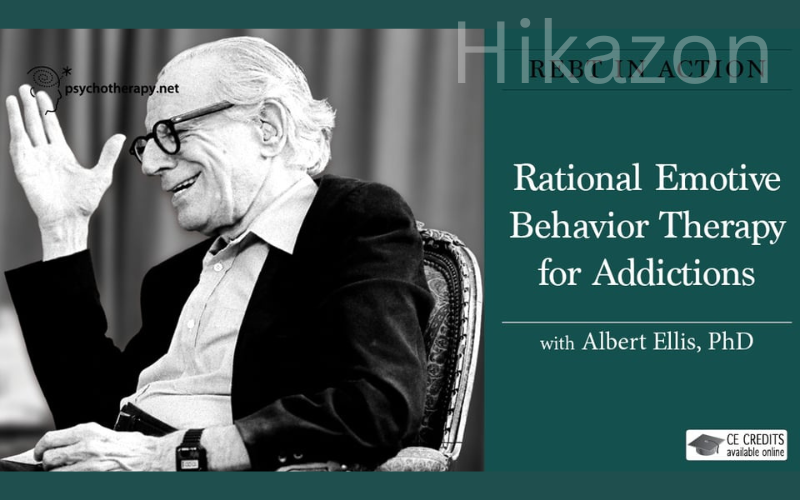
Rational Emotive Behavior Therapy for Addictions with Albert Ellis
$8.00
Rational Emotive Behavior Therapy for Addictions with Albert Ellis – Digital Download!
Content Proof:

Rational emotive behavior therapy for addictions
Introduction
Rational Emotive Behavior Therapy (REBT), created by the brilliant mind of Albert Ellis, shines as a beacon of hope for people grappling with addictions. At its core, REBT is not merely a therapeutic approach; it’s a revolutionary way of understanding and addressing the complexities of emotional disturbances that often accompany addictive behaviors. The inspiration behind REBT’s effectiveness lies in its clever use of the ABC model, which stands for Activating event, Beliefs, and Consequences. This framework postulates that the irrational beliefs we harbor beliefs that can imprison us in cycles of despair and hopelessness are the true culprits behind emotional disturbances. With addictions, the stakes are incredibly high; the grip of substances can distort reality, leading individuals to feel as if they cannot enjoy life without them. However, by leveraging the power of REBT and its intrinsic focus on cognitive restructuring, individuals can break free from these chains and reclaim their autonomy and joy.
Understanding the ABC Model
The ABC model is the bedrock of REBT and serves as a guiding principle for individuals facing addictions.
Activating Events
The term “Activating events” refers to the triggers or stimuli that provoke emotional responses. In the context of addiction, this could be anything from feeling stressed at work to being in social situations that reignite cravings for substances.
Beliefs
The process begins when individuals recognize their beliefs about these activating events. Often, these beliefs are irrational and rooted in distorted thinking. For instance, a common belief could be, “I must drink to feel relaxed among my peers.” This negative belief creates a cycle where the individual feels compelled to engage in harmful behaviors to alleviate their self-imposed pressure.
Consequences
Finally, the consequences of these beliefs emerge, manifesting as emotional disturbances and behavioral patterns that perpetuate addiction. It’s a vicious cycle, akin to a whirlpool where one irrational thought pulls the individual deeper into a sea of despair. Luckily, REBT provides the tools to swim against this current, allowing clients to reframe their beliefs into more rational thoughts. The journey through the ABC model is not just about acknowledgment; it invites individuals to embark on a transformative path where genuine healing is possible.
Cognitive Restructuring and Its Role in Addiction Treatment
Cognitive restructuring is one of the most significant components of REBT. This process empowers clients to identify and challenge irrational beliefs that fuel their addiction.
Identifying Irrational Beliefs
The first step involves recognizing moments when irrational beliefs take hold. Clients are encouraged to maintain a journal or diary to log their thoughts and feelings, creating an opportunity for self-reflection. This practice can illuminate patterns in thinking that may have gone unnoticed, such as believing that they are “a failure” for relapsing or that their addiction defines them. Such beleaguering thoughts can be debilitating, leading to a downward spiral of guilt and shame.
Replacing with Rational Thoughts
Once these beliefs are identified, individuals can begin to replace them with more rational alternatives. For example, instead of believing they will never have fun without alcohol, they could reframe that thought to, “I can enjoy social activities without substances.” This fundamental shift in belief is not just a mere substitution of words but a profound reframing of reality that opens up new possibilities for behavior and emotional responses.
List: Steps of Cognitive Restructuring
- Identify the irrational belief: Recognize automatic negative thoughts.
- Challenge the belief: Evaluate the validity and origins of these thoughts.
- Reframe and replace: Develop rational counter-beliefs.
- Behavioral experimentation: Test the new belief by engaging in activities without reliance on substances.
Through this process, cognitive restructuring fosters resilience, allowing individuals to regain control over their behaviors and emotional well-being.
Emotive and Behavioral Techniques
In addition to cognitive restructuring, REBT integrates emotive and behavioral techniques to foster lasting behavioral changes.
Emotive Techniques
These include techniques such as imagery and role-playing, which aim to provoke emotional responses that can lead to growth and healing. For instance, positive imagery exercises can encourage clients to envision themselves in a future where they are free from addiction and capable of experiencing joy without substances. Role-playing helps individuals practice responses in challenging situations that may trigger cravings, providing them the confidence to navigate real-life scenarios effectively.
Behavioral Assignments
REBT also involves the implementation of behavioral assignments that encourage clients to confront their addiction-related behaviors. These assignments could range from social engagement without substances to joining a support group, reinforcing the idea that recovery is not a solitary journey but a shared experience.
Evidence Supporting the Efficacy of REBT
Meta-analyses and systematic reviews of REBT for addiction treatment illustrate its effectiveness in various domains. A significant body of research highlights that clients often experience:
- Reduced substance use and cravings: Studies consistently show that individuals undergoing REBT exhibit lower levels of substance consumption compared to those who do not receive this therapeutic approach.
- Enhanced mental health and emotional well-being: Research indicates marked improvements in overall mental health, including reduced anxiety and depression levels in individuals with addiction issues.
- Adaptability across diverse contexts: REBT has shown flexibility in its application, making it suitable for different populations and settings, from outpatient programs to intensive residential treatments.
Table summarizing research findings
| Study Type | Results | Population Engaged |
| Meta-Analysis | Significant reduction in cravings | Individuals undergoing addiction treatment |
| Systematic Review | Improved mental health outcomes | Various demographic groups |
| Longitudinal Study | Sustained recovery rates over time | Long-term substance users |
The adaptability of REBT further enhances its utility in varied situations, making it a versatile choice for tackling addiction.
Conclusion
In summary, Rational Emotive Behavior Therapy stands out as a powerful approach in the realm of addiction treatment. Its focus on the ABC model facilitates a deep understanding of the interplay between beliefs and behaviors, empowering individuals to dismantle irrational thoughts and replace them with rational, constructive beliefs. By emphasizing cognitive restructuring, emotive techniques, and adaptable behavioral assignments, REBT offers a robust framework that promotes lasting change. The existing body of research validates its efficacy, proving that people struggling with addictions can indeed create meaningful and sustainable recovery paths. With ongoing support and self-acceptance, individuals can navigate their journeys toward sobriety, discovering not just a life without addiction but one filled with renewed purpose and joy.
Frequently Asked Questions:
Business Model Innovation: We use a group buying approach that enables users to split expenses and get discounted access to well-liked courses.
Despite worries regarding distribution strategies from content creators, this strategy helps people with low incomes.
Legal Aspects to Take into Account: Our operations’ legality entails several intricate considerations.
There are no explicit resale restrictions mentioned at the time of purchase, even though we do not have the course developers’ express consent to redistribute their content.
This uncertainty gives us the chance to offer reasonably priced instructional materials.
Quality Assurance: We guarantee that every course resource you buy is exactly the same as what the authors themselves are offering.
It’s crucial to realize, nevertheless, that we are not authorized suppliers. Therefore, the following are not included in our offerings:
– Live coaching sessions or calls with the course author.
– Entry to groups or portals that are only available to authors.
– Participation in closed forums.
– Straightforward email assistance from the writer or their group.
Our goal is to lower the barrier to education by providing these courses on our own, without the official channels’ premium services. We value your comprehension of our distinct methodology.
Be the first to review “Rational Emotive Behavior Therapy for Addictions with Albert Ellis”
You must be logged in to post a review.
Related products


$31.00

Psychology
$85.00


$39.00


$31.00


$23.00

Psychology
$46.00


$78.00


Reviews
There are no reviews yet.